

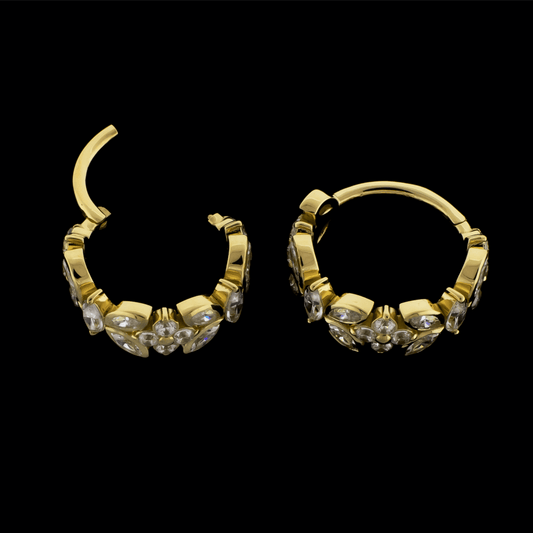
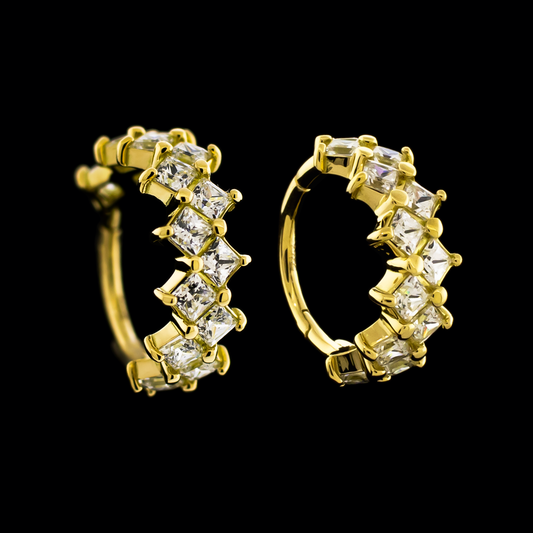
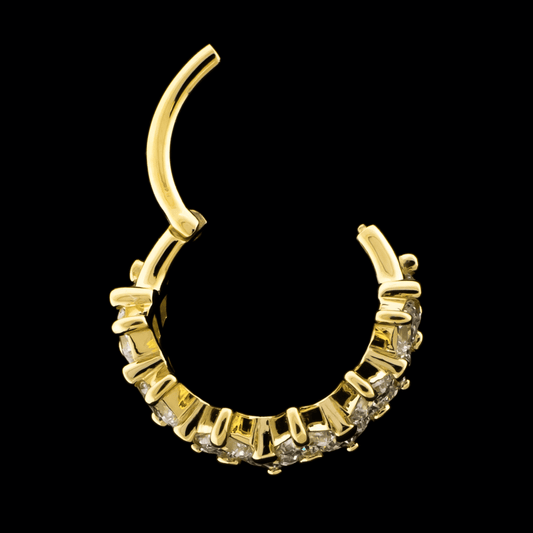

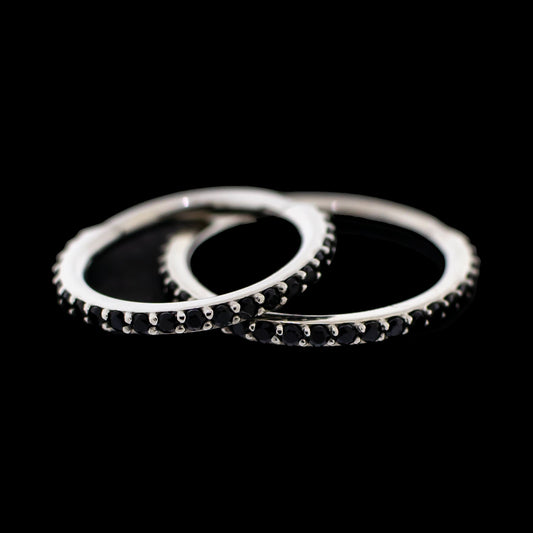
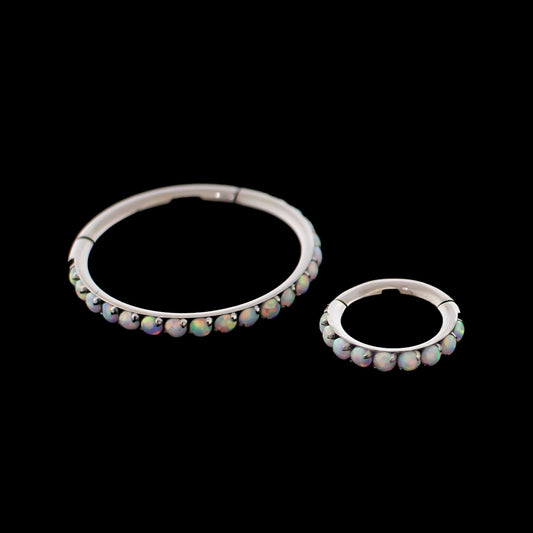
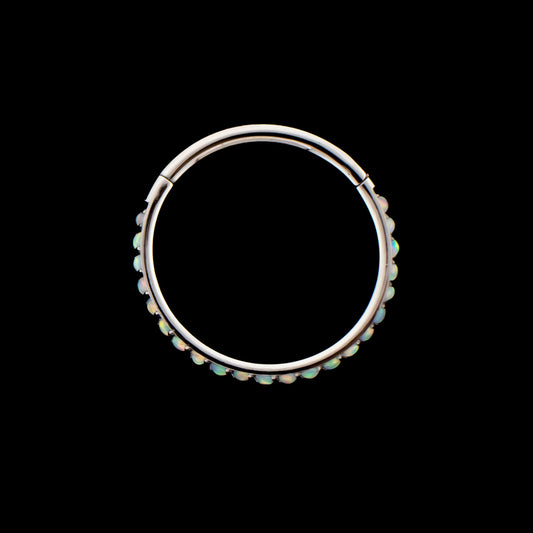
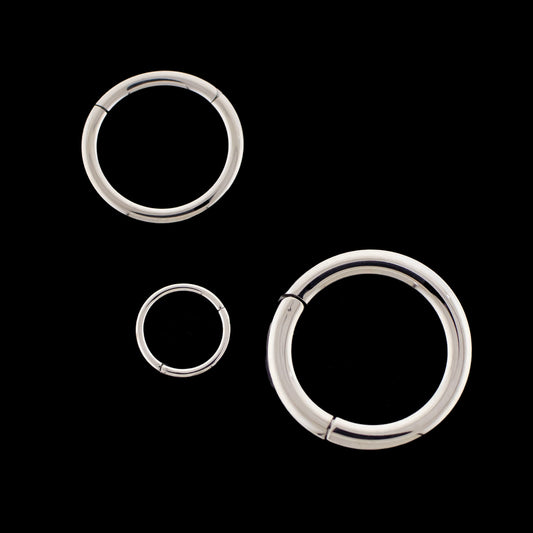
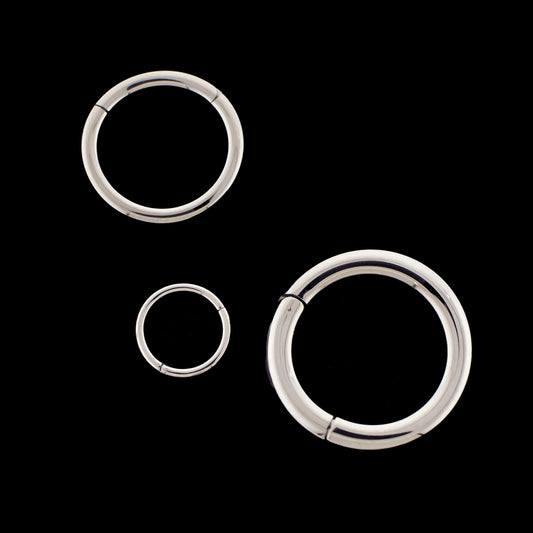
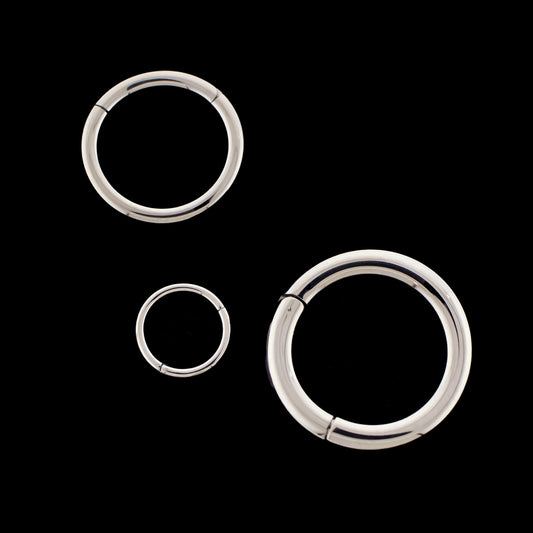
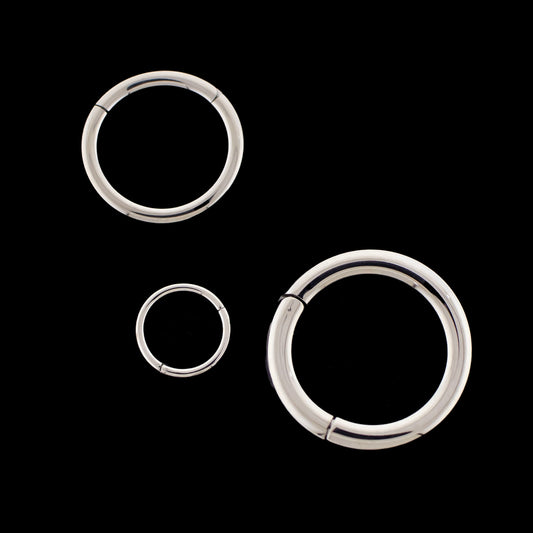
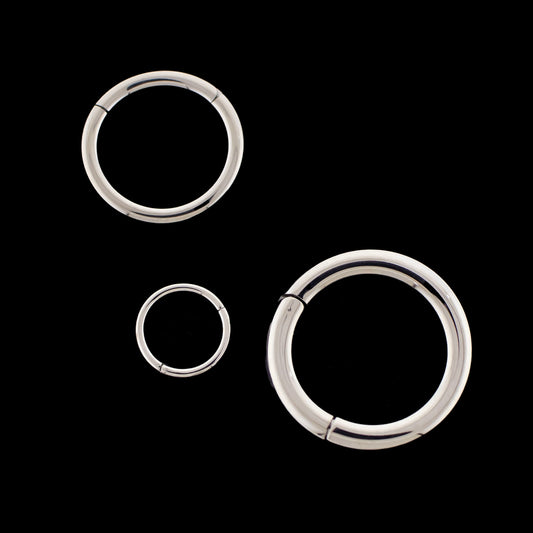
Conch ring jewelry from Khrysos covers healed conch piercings in 18K solid gold gemstone designs and plain titanium hinged segment rings, the conch ring piercing format that suits a fully healed cartilage placement. Every ring clicks closed on a small hinge, with no tools or bending required at one of the harder-to-reach spots on the ear. APP Phase 1 and 2 verified, gauges 18G to 10G.
What Is a Conch Ring
The conch is the large curved bowl of cartilage that fills most of the inner ear, and a conch piercing ring placed there sits at one of the most visible points in a curated ear. It sits deeper than the helix and typically faces slightly forward, which means jewelry there is clearly visible from the front but difficult to reach from behind. That combination makes the format of your jewelry as important as the style of it.
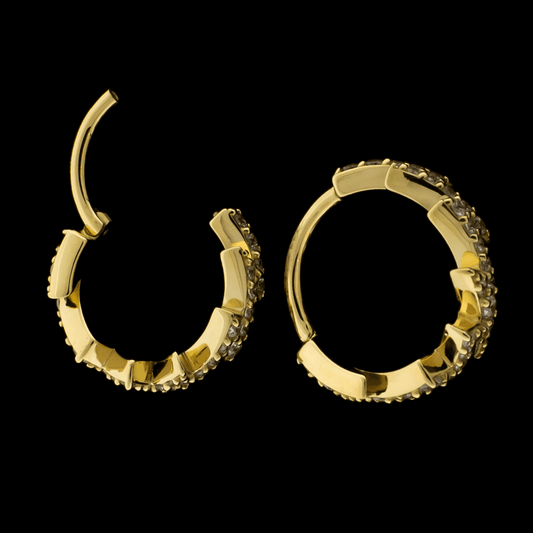
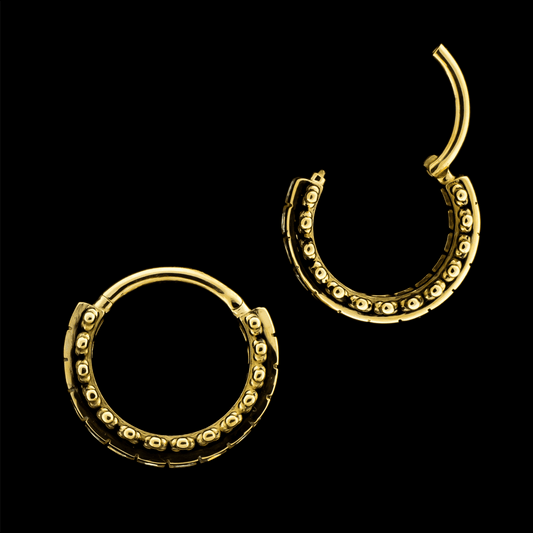
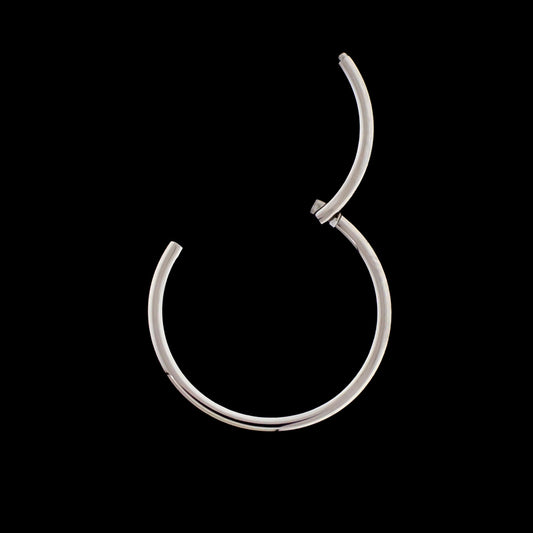
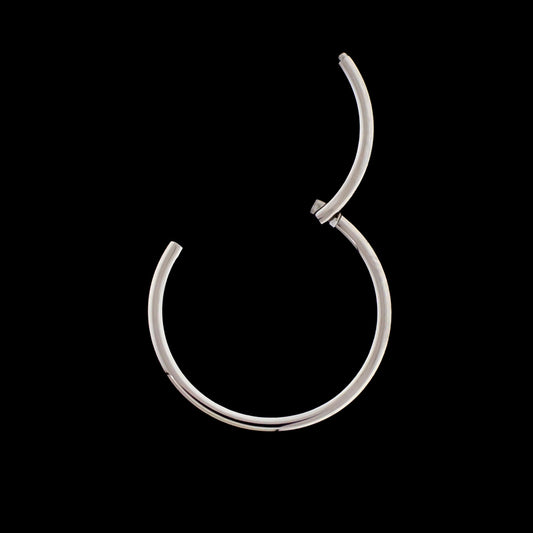
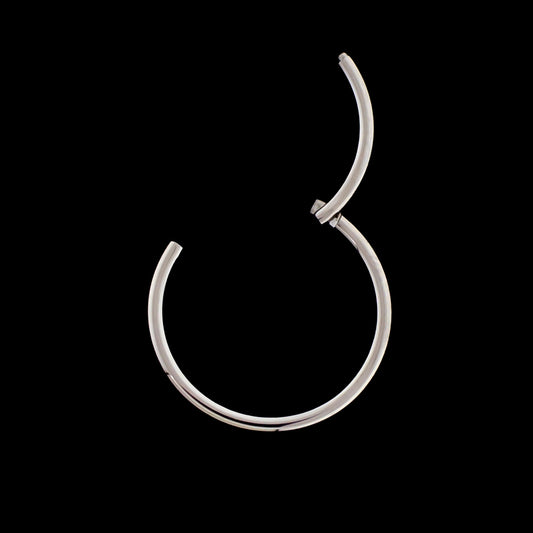
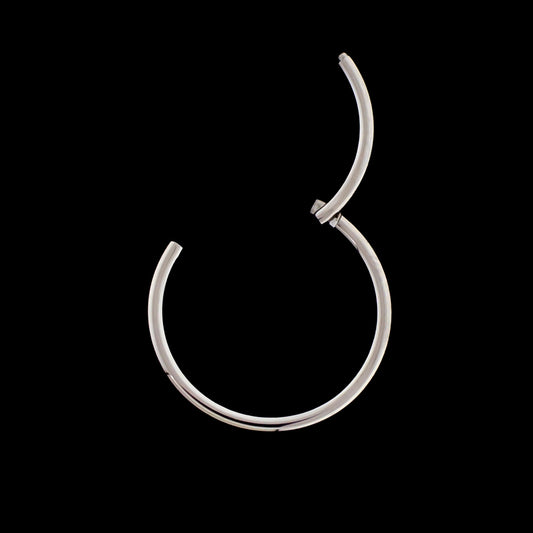
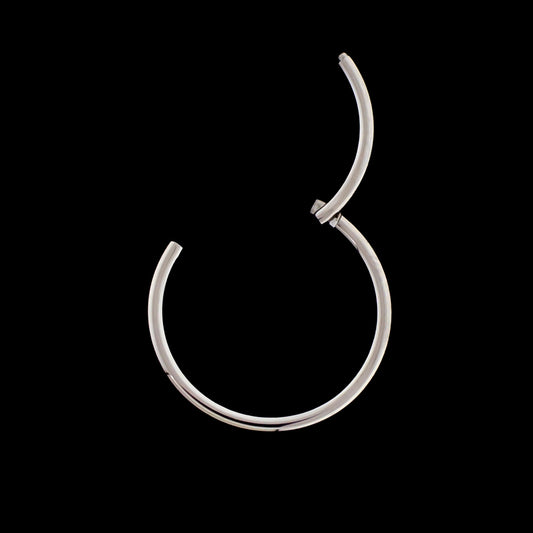
The conch ring in this collection opens on a small hinge, creating a gap wide enough to slide through the piercing channel, then presses closed with a click that locks the ring shut. The hinged conch ring design solves the reach problem. Because one hand can press the segment open from the front and then close it again without needing to grip the back, most wearers find they can change a hinged conch ring unassisted once the piercing is healed. A captive bead ring or a seamless ring at this placement would require both hands and often a second person, because you cannot both hold the ring in position and manipulate the bead or the gap at the same time.
This collection holds two groups of rings. The gold group includes several 18K solid gold gemstone designs, including Elektra and Liana, that are made in the conch-specific diameter range and set with premium zirconia. The titanium group includes plain hinged segment rings in gauges from 18G down to 10G, available as a more accessible everyday option.
Conch Ring or Conch Stud
Many piercers start a conch piercing with a flat-back labret or stud rather than a ring. Rings heal differently from posts because their circular profile can move slightly as the ear flexes, which creates friction against the healing fistula. A flat-back labret stays stable and keeps the disc flush against the inner cartilage, reducing irritation during the months of active healing. Switching to a ring is a separate decision you make once the piercing is fully settled.
The comparison between a ring and a stud for a healed conch comes down to visibility and personal style. A ring sits proud of the cartilage and creates a more visible, statement-forward look. A labret or threadless end sits closer to the ear and suits wearers who want their conch jewelry to blend into a larger ear curation rather than anchor it. If you are still in the healing phase, or if your piercer recommended a flat-back for initial jewelry, the Titanium Internally Threaded Labrets collection has the right format for that stage.
Choosing Your Conch Ring Size
Getting the size right for a conch ring matters more than at most other placements, because the conch has more anatomical variation between individuals than helix or lobe piercings. Two measurements decide the fit: gauge and inner diameter.
Gauge must match your existing piercing. 16G (1.2mm) is the standard for most professional cartilage piercings, and the majority of the rings in this collection are 16G. Heavier gauges, from 14G down to 10G, suit wearers who have stretched the conch over time or who prefer a more substantial ring profile.
Inner diameter is where conch sizing gets individual. The hollow of the conch is larger than a helix, so a ring needs a wider diameter to sit correctly rather than pinching the tissue. The gold gemstone rings in this collection are offered in 10mm and 11mm diameters, which is the typical range for a standard adult conch. A diameter that is too small will press against the tissue and cause discomfort or migration. One that is too large will hang or rotate.
Whether you have an inner conch piercing or an outer conch piercing also shapes which diameter works. Inner conch piercings sit closer to the ear canal, where anatomy is often tighter, while outer conch piercings have more surrounding tissue and can carry a larger ring. Your piercer can measure your placement and confirm the right diameter before you order, which is the most reliable approach if you are unsure.
- 18G and 16G: fine and standard gauges, covering most healed conch piercings done by a professional piercer
- 14G and 12G: mid gauges suited to wearers who have progressively sized up or prefer a more visible ring profile
- 10G: heavier gauge for those who have intentionally stretched the conch over time
18K Gold vs Titanium Conch Rings
Both materials in this collection are body-safe choices for healed piercings, but they serve different priorities. Choosing between them is a decision about how you want the ring to look and how much you want to invest in the piece.
18K Solid Gold Gemmed Conch Rings
Solid 18K gold contains 75% pure gold and carries the 750 hallmark as verification of that composition. The gold in this collection is not plated or coated over a base metal; it is the same alloy from surface to core. Each piece comes with Gold Composition Documentation confirming the gold content. Because solid 18K gold is softer than titanium, it is most appropriate for healed piercings where the ring will not be under constant manipulation.
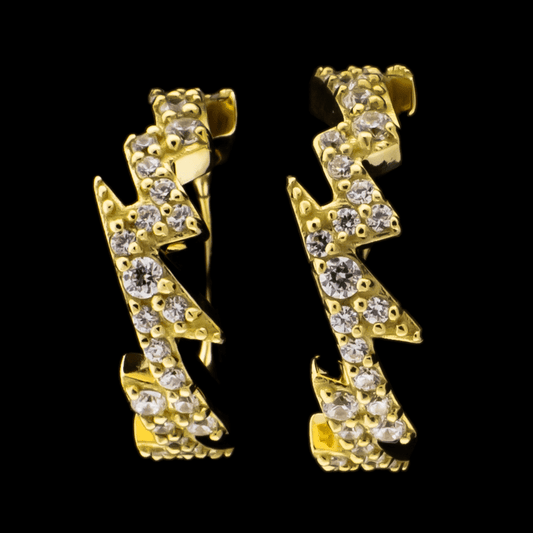
The gemstone designs in this collection use premium zirconia settings engineered for long-term body jewelry wear. Elektra is a 16G hinged conch ring in 18K yellow gold with white zirconia gems arranged in a lightning-bolt pattern, available in 10mm and 11mm diameters.
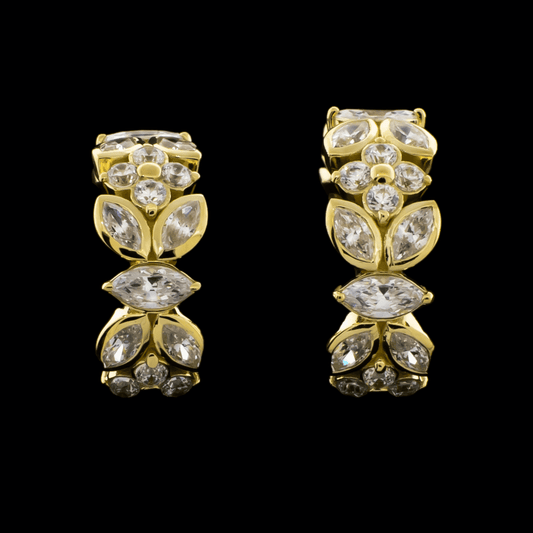
Liana is also 16G in 18K yellow gold, set with round and marquise-cut zirconia in an elegant repeating pattern designed to read clearly at the size of the conch placement. Browse Liana and the other gold gemstone styles for the full range.
Pricing on solid 18K gold pieces reflects current gold market values and may shift over time. Contact the Khrysos team for current pricing before ordering.
Titanium Hinged Segment Rings
The titanium options in this collection are plain hinged segment rings machined from ASTM F-136 implant-grade titanium. This is the same material APP-affiliated studios specify for initial and long-term body jewelry, and it is covered by a lifetime workmanship guarantee from Khrysos. Titanium is nickel-free, lightweight, and does not corrode against skin, making it a reliable everyday choice that will not cause contact irritation in a healed conch.
Plain titanium rings suit wearers who want the visual of a hoop without the cost of gold, and they work well in denser ear curations where the ring is one of several pieces rather than the focal point. The range covers 18G through 10G in several diameters, giving more sizing flexibility than the gold group. To browse the full range of titanium hinged styles beyond this collection, see the Titanium Hinged Rings collection.
When Can You Wear a Conch Ring
A conch piercing is a cartilage piercing, and cartilage heals more slowly than soft tissue. The timeline matters when you are deciding whether to switch from an initial labret to a ring.
The earliest most piercers recommend for a first jewelry change on a cartilage piercing is three to six months, and that is only if healing has gone smoothly. Full healing for cartilage can take up to twelve months, and the outer skin often appears healed long before the fistula has fully stabilized inside. Switching to a ring too early introduces circular motion against tissue that is still forming, which can extend healing or cause irritation bumps.
The safest approach is to have your piercer examine the piercing before switching to a ring. They can assess the internal healing that you cannot see, confirm that the fistula is stable enough to handle the movement of a ring, and remove the initial jewelry in a way that does not stress the new channel. A healed conch is the right moment for conch ring jewelry. If your piercing is still in the early months, patience is the better investment.
Why Buy Your Conch Ring at Khrysos
Khrysos is APP Phase 1 and 2 verified, and every piece of conch ring jewelry in this collection is produced at an ISO9001-certified facility to APP material and dimension standards. For wearers who prefer a hinged gold option across a broader range of styles, the 18KT Gold Hinged Segment Rings collection covers the full 18K gold hinged range.
- APP Phase 1 and 2 Verified: Every ring meets the material, dimension, and finishing standards required for use in APP-affiliated studios
- ISO9001-Certified Manufacturing: Consistent quality control across hinge tolerances, diameter accuracy, and surface finish on every piece
- 18K Solid Gold and ASTM F-136 Titanium: Both materials are genuine throughout, with Gold Composition Documentation for gold pieces and a lifetime workmanship guarantee on titanium
- Click-Closed, Tool-Free Design: The hinged mechanism opens and closes with one hand, which matters at a placement as deep as the conch
- Same-Day Shipping and Wholesale Access: Orders within the cutoff window ship the same day, and wholesale accounts are available for professional piercers
FAQ
What is a conch ring?
A conch ring is a hoop worn in the conch piercing, the large hollow cartilage bowl of the inner ear. This collection uses a hinged click-closed design that opens on a small hinge and snaps shut, with no bead or bending required.
What size conch ring do I need?
Most standard conch piercings use 16G and an inner diameter of 10mm to 11mm, though anatomy varies and your piercer can confirm the right fit. Heavier gauges from 14G to 10G suit piercings that have been sized up over time.
Should I wear a conch ring or a stud?
For a fresh or healing conch, a flat-back labret is the standard initial jewelry because it stays stable while tissue heals. A conch ring suits a fully healed conch and creates a more prominent, visible look than a stud.
When can I put a ring in a new conch piercing?
Cartilage piercings need at least three to six months before a first jewelry change, and full healing takes up to twelve months. Have your piercer confirm the piercing is ready before switching to a ring.
Is a gold or titanium conch ring better?
Both are body-safe for healed piercings. Solid 18K gold offers a premium look with 750-hallmarked documentation, while ASTM F-136 titanium is lighter, more affordable, and backed by a lifetime workmanship guarantee.
How do I open and close a hinged conch ring?
Press the small hinged segment open from the front to create the gap, slide the ring through the piercing, then press the segment back until it clicks shut. The mechanism is designed for one-handed operation.
Are Khrysos conch rings APP-compliant?
Yes. Khrysos is APP Phase 1 and 2 verified, and every ring in this collection meets APP material and dimension standards for body jewelry in healed piercings.
Conclusion
Whether you want a gemstone statement piece in solid 18K gold or a clean titanium conch piercing ring for everyday wear, the right conch ring choice comes down to gauge, diameter, and material. The hinged click-closed design makes changes manageable at a placement that is awkward to reach. Use the sizing guide, confirm with your piercer, and shop confidently in an APP-verified collection backed by material documentation.