















Internally Threaded Titanium Jewelry: ASTM F-136, Built for Every Stage of Your Piercing
Internally threaded titanium jewelry puts threads where they belong: on the decorative end, not on the post shaft that passes through your piercing. Every piece in the Khrysos ASTM F-136 titanium collection is Ti 6AL-4V ELI, nickel-free throughout, autoclavable, and APP-recognized. The range covers labrets, curved barbells, circular barbells, nipple barbells, floating navels, and tiny ends. Backed by a lifetime workmanship guarantee.
Shop Internally Threaded Titanium Jewelry by Style
The Khrysos internally threaded titanium jewelry collection is organized around placement needs. Each style type serves a specific group of piercings, and matching the right format to the right anatomy makes the difference between a comfortable wear and a problematic one. The Titanium Internally Threaded Labrets sub-collection covers the most versatile options in the range.
Titanium Internally Threaded Labret Posts
The most versatile piece in the collection. A flat disc backing, smooth shaft, and interchangeable internally threaded end cover the broadest range of placements of any single jewelry format. The 16G/18G Titanium Internally Threaded Labret Post is available in disc sizes of 3mm, 4mm, and 5mm across multiple shaft lengths in 14G through 18G gauges. Placements include helix, tragus, conch, flat, forward helix, standard and high lobe, labret, philtrum, medusa, monroe, ashley, and nostril. One post format that moves across the full ear and facial curation.
Titanium Internally Threaded Curved Barbells
Designed for placements where the piercing channel follows a natural anatomical arc. A straight barbell creates uneven tissue pressure in curved placements because the exit angles at both holes pull against the tissue in opposing directions. A curved barbell follows the natural angle of the anatomy, distributing exit pressure evenly at both ends. Placements include navel, eyebrow, rook, daith, and vertical labret. Available in 14G and 16G across multiple lengths.
Titanium Internally Threaded Circular Barbells
A horseshoe-style open ring with internally threaded beads at each end. Used in septum, daith, rook, and circular industrial placements where a ring format is preferred but screw security is needed. The internal threading keeps each bead surface smooth and prevents thread exposure inside the piercing channel throughout the wear period. Available in a range of gauge and diameter sizes.
Additional Internally Threaded Titanium Styles
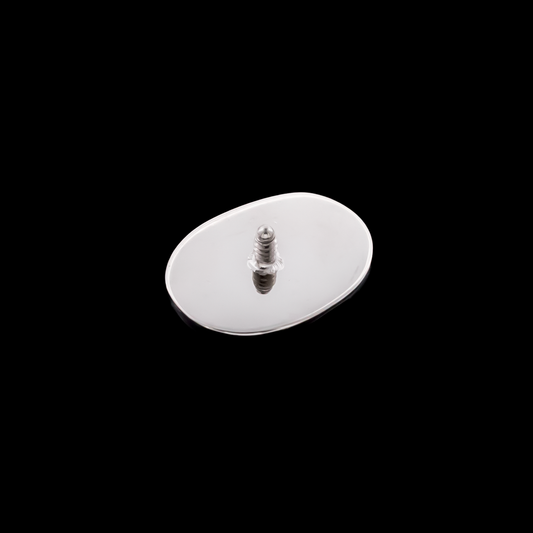
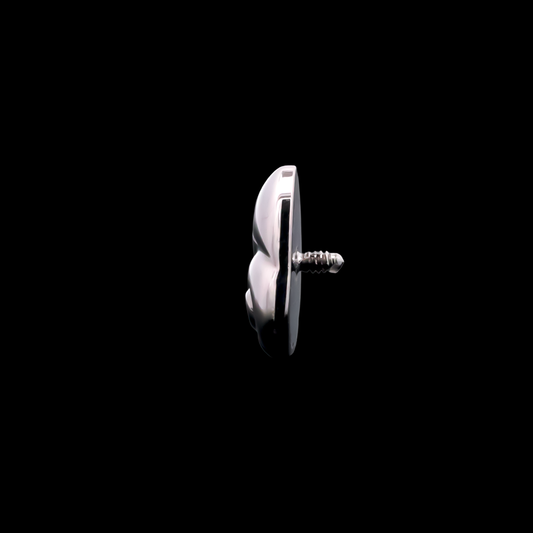
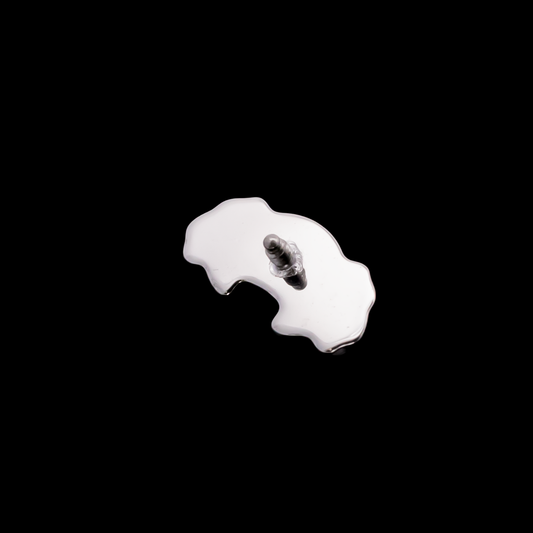
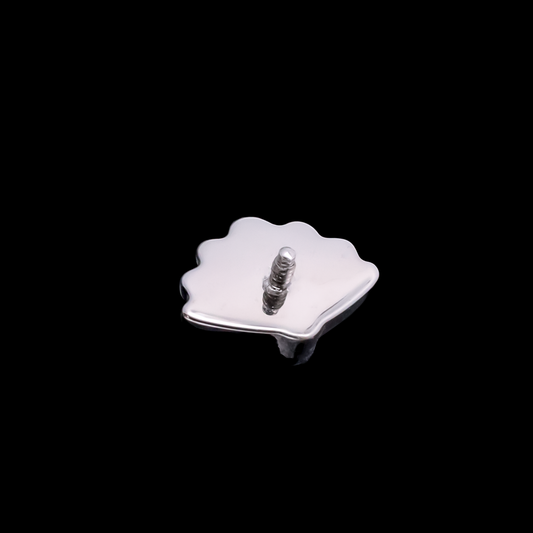
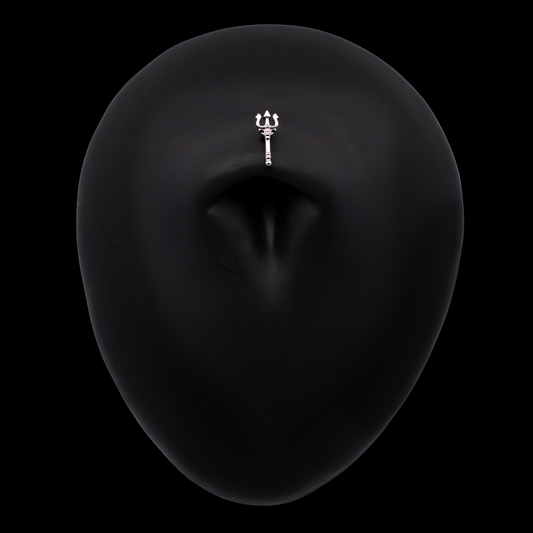
The collection also includes 14G internally threaded nipple barbells for nipple piercings, internally threaded floating navel jewelry designed to tuck the backing inside the navel for the floating visual effect, and a tiny ends collection of small-scale decorative tops compatible with internally threaded posts across gauges. Every style in this range is produced to the same ASTM F-136 specification as the core labret post.
What Is Internally Threaded Jewelry and Why Professional Piercers Recommend It?
The term internally threaded appears regularly in piercing recommendations but is rarely explained to the person receiving the advice. Understanding the mechanism makes the recommendation logical rather than simply authoritative.
Internally Threaded vs Externally Threaded vs Threadless
Internally Threaded:
• Threads sit on the removable decorative end, not on the post shaft
• Post shaft is smooth throughout with no surface irregularity
• Suitable for both fresh and fully healed piercings
Externally Threaded:
• Threads are machined directly onto the post shaft
• Rough threaded shaft surface contacts tissue on every insertion and change
• Appropriate for fully healed piercings only
Threadless (Push-Pin):
• No threads on any component; the end is held by pin tension alone
• Post shaft is smooth throughout
• Best for fully healed piercings where frequent end changes are preferred
Summary: Internally threaded is the only format appropriate for fresh piercings because its smooth shaft contacts tissue with no roughness during insertion or changes. Externally threaded posts expose rough thread surfaces to the fistula on every insertion, creating micro-trauma in healing tissue.
Why Smooth Shaft Matters for Healing Piercings
When externally threaded jewelry is inserted or changed, the threaded portion of the shaft drags across the tissue inside the fistula. In a fresh or healing piercing, this creates micro-abrasions that extend healing time, increase the risk of irritation bumps, and introduce surface contamination from thread grooves into the piercing channel. A smooth internally threaded titanium shaft passes through the fistula with no surface irregularity and no tissue drag. This is why the APP recommends internally threaded or threadless jewelry for initial piercings and throughout the healing period.
ASTM F-136 Titanium: What This Specification Actually Means
Implant-grade titanium is a marketing phrase. ASTM F-136 is a specific material certification with a defined alloy composition, processing requirements, and quality standards issued by ASTM International. The two are not interchangeable, and the distinction matters directly in a titanium internally threaded jewelry context.
Ti 6AL-4V ELI: The Alloy Composition Behind the Certification
ASTM F-136 titanium is Ti 6AL-4V ELI: titanium alloyed with 6% aluminum and 4% vanadium, produced to the Extra Low Interstitial specification. ELI limits the maximum allowable levels of oxygen, nitrogen, carbon, and hydrogen in the alloy. Lower interstitial content produces a more biocompatible material with better fracture toughness and reduced risk of tissue reaction. The ASTM F-136 standard governs this alloy for surgical implant use, which is the same standard the APP has adopted as the benchmark for body jewelry. Generic grade titanium or titanium-coated base-metal jewelry does not meet this specification.
Why ASTM F-136 Outperforms Surgical Steel for Piercing Jewelry
316L surgical steel is the most common alternative material in body jewelry markets. It contains 2 to 4% nickel as a structural alloy component. Under long-term contact with body chemistry in a piercing environment, nickel can leach from the steel surface into tissue, triggering sensitivity reactions in susceptible individuals. An estimated 10 to 15% of the population carries some degree of nickel sensitivity, and internally threaded titanium jewelry eliminates this risk entirely. ASTM F-136 titanium contains zero nickel. This is not a design or alloy selection decision: titanium is nickel-free at the elemental level, which means there is no nickel present to leach regardless of wear duration or body chemistry.
Anodization: Color Without Coating
ASTM F-136 titanium can be anodized. Anodization is an electrochemical process that thickens the titanium oxide layer on the surface of the metal to specific depths. Each oxide thickness reflects light at a different wavelength, producing a distinct visible color: gold, rose gold, blue, green, purple, or the full iridescent spectrum. The color produced is part of the titanium oxide layer itself, not a separate material applied on top. It cannot peel, chip, or separate from the base material the way plating or PVD coating can. Anodized internally threaded titanium remains biocompatible and appropriate for healed piercings in all color variants.
Autoclavability: The Professional Sterilization Standard
ASTM F-136 titanium is fully autoclavable. Autoclaving is the sterilization method used by professional piercing studios: pressurized steam at 134 degrees Celsius for a minimum contact time kills all biological contaminants on the surface of a piece before it is inserted into a fresh piercing. Lower-grade metals, coated jewelry, acrylic components, and many plated materials cannot withstand autoclave conditions without degrading, warping, or losing surface integrity. ASTM F-136 titanium withstands the full autoclave cycle without material degradation, surface change, or loss of biocompatibility. This is the practical reason why professional piercers specify ASTM F-136 by name rather than accepting generic titanium alternatives.
Sizing Your Internally Threaded Titanium Jewelry
Three measurements determine whether a piece of internally threaded titanium jewelry fits correctly: the gauge, the wearable length, and the disc size. Getting all three right before ordering eliminates the most common problems before the jewelry is inserted.
Gauge: Which Size for Which Placement
14G (1.6mm) is standard for navel and nipple piercings. 16G (1.2mm) covers most ear cartilage placements including helix, tragus, conch, flat, rook, daith, and forward helix, as well as labret, philtrum, medusa, and eyebrow piercings. 18G (1.0mm) is standard for nostril piercings and finer cartilage placements. The gauge used by your piercer at the time of service is the correct gauge for replacement and downsizing jewelry at the same site.
Wearable Length
Wearable length is the distance from the inner face of the disc to the tip of the post shaft. It represents the amount of tissue the post crosses. Fresh piercings require longer wearable lengths to accommodate swelling, and your piercer selects the appropriate initial length at the time of piercing. Downsizing to a shorter post typically occurs four to eight weeks into healing once swelling resolves. For a healed piercing, measure tissue thickness at the site with a soft tape or gauge, then add 1 to 2mm for comfortable wear without disc pressure.
Disc Size: 3mm vs 4mm vs 5mm
Disc size is the diameter of the flat backing plate at the rear of the post. A disc too small for a fresh piercing creates concentrated pressure at a single point rather than distributing force across a wider tissue surface, increasing the risk of embedding. For fresh piercings, a 5mm disc spreads pressure over more area and prevents the disc from sinking into swollen tissue during the healing period. For semi-healed placements where acute swelling has resolved, a 4mm disc is appropriate. For fully healed piercings with stable anatomy, a 3mm disc sits cleanly and discretely at the back of the placement. Do not reduce disc size in a fresh or actively healing piercing without guidance from your piercer.
Note: Your piercer will prescribe the correct disc size at the time of piercing based on your anatomy and placement specifics. The right initial disc size prevents one of the most avoidable complications of healing body jewelry.
The Interchangeable End System
One of the most practical and underappreciated features of internally threaded titanium jewelry is the interchangeable end system. The post is the investment. The ends are the rotation.
How Internally Threaded Ends Work
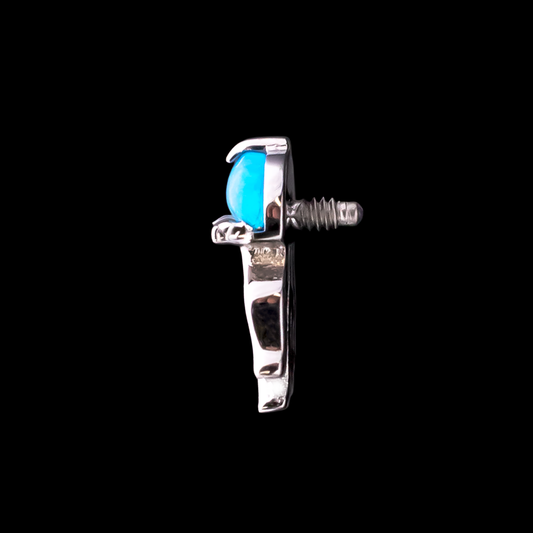
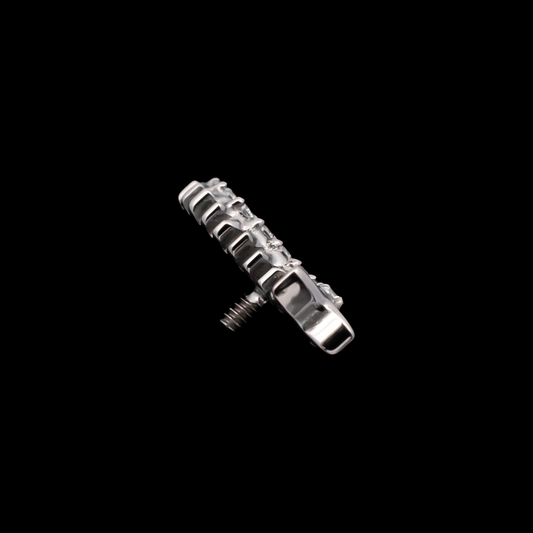
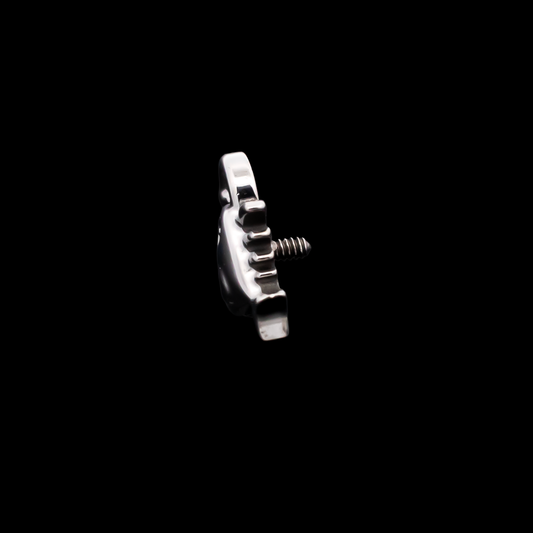
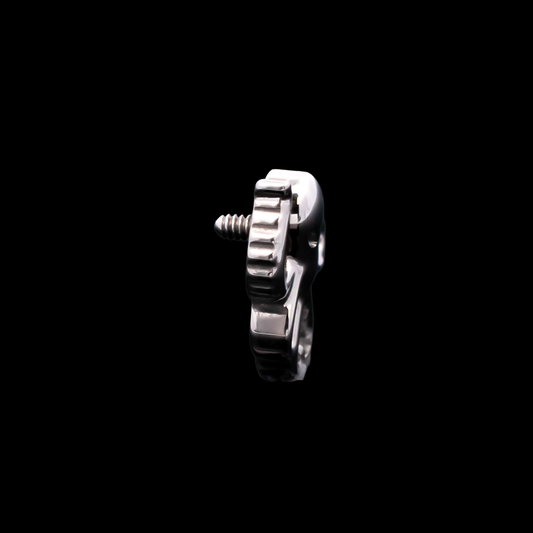
Every internally threaded decorative end has a small threaded post extending from its base. This post screws into the hollow threaded section inside the shaft of the labret or barbell. Threading is gauge-matched: a 16G post accepts 16G internally threaded ends, a 14G post accepts 14G ends. The end is tightened finger-tight. No tools, no overtightening required. To change the end on a healed piercing, hold the disc firmly at the back of the piercing and unscrew the end from the front.
Building Your Style Rotation on One Post
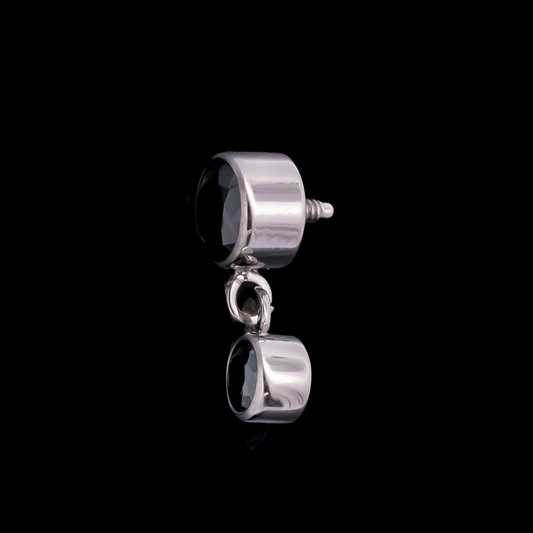
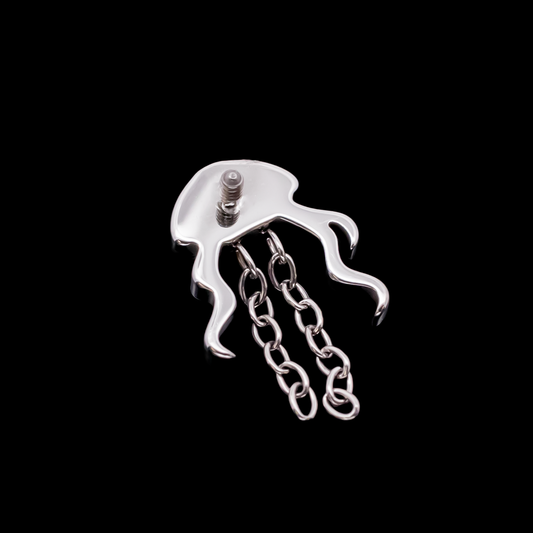
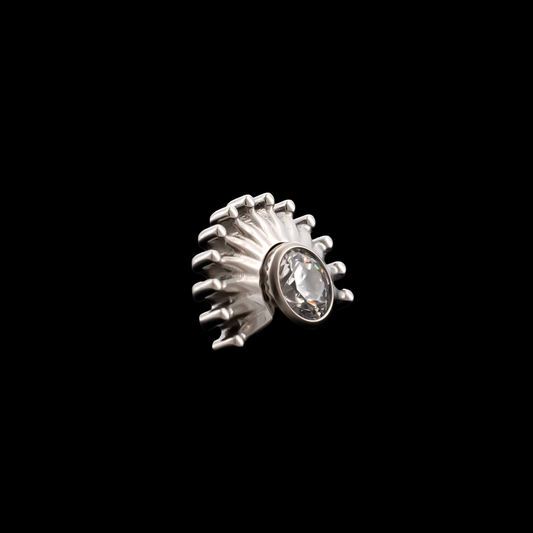
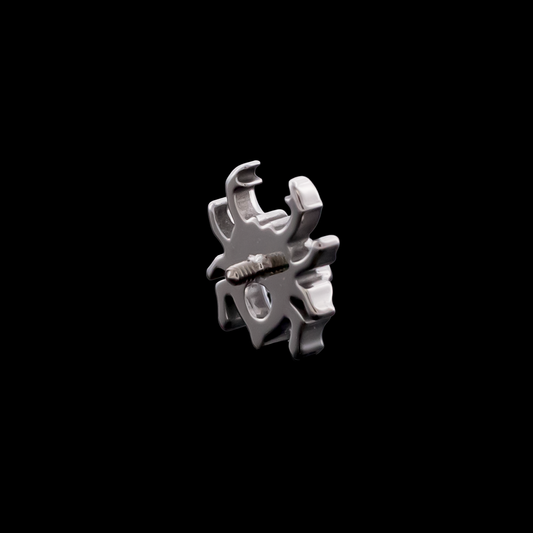
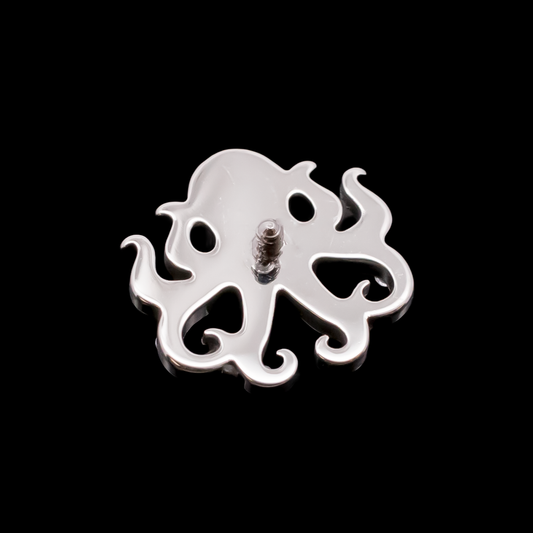
A single titanium labret post serves as the base for plain ball ends, flat disc ends, prong-set gem ends, bezel-set stone ends, and shaped decorative ends. Changing the end changes the entire look of the piercing without removing the post from a stable, healed site. For style variety across seasons and occasions, the post is the fixed foundation and the ends are the variables. For piercers and collectors who want to build a complete matching setup that pairs titanium posts with solid gold flat-back jewelry in the same format, our 14KT Gold Labrets collection carries the same flat-back labret design in APP-verified solid 14KT gold.
Why Khrysos ASTM F-136 Titanium Internally Threaded Collection
Many suppliers claim ASTM F-136 compliance. Consistent material verification, professional certification, and post-purchase guarantee are what separate a documented claim from a label.
Every piece of Khrysos internally threaded titanium jewelry is produced in ISO9001-certified manufacturing facilities and verified against APP Phase 1 and Phase 2 standards, the highest independent safety certification available in professional body piercing. The ASTM F-136 material specification is applied uniformly across the full titanium line, not selectively to certain products. Every piece is fully autoclavable, making the collection compatible with professional studio sterilization protocols for initial piercing use.
The Khrysos lifetime workmanship guarantee applies to the entire ASTM F-136 titanium internally threaded range without a time limit. If any defect caused by manufacturing occurs at any point, return the original piece and it will be replaced. This is a commitment that most body jewelry suppliers do not make, and one that reflects confidence in the production standards behind every piece. Orders placed before 2PM EST Monday through Friday ship the same day.
Caring for Your Internally Threaded Titanium Jewelry
ASTM F-136 titanium requires minimal maintenance compared to alternative materials, but consistent care practices keep both the titanium internally threaded jewelry and the piercing performing correctly.
Clean the post and disc surface with a sterile saline wound wash or fragrance-free mild soap during healing and as needed once healed. Avoid alcohol, hydrogen peroxide, harsh chemical cleaners, and medicated ointments directly on healing piercing jewelry. These do not clean more effectively than saline and can damage healing tissue or leave residue on the jewelry surface. Titanium does not tarnish. Anodized color on the titanium oxide surface does not polish away with standard jewelry cleaning, but avoid abrasive scrubbing on any anodized finish. If an internally threaded end becomes loose during wear, tighten it finger-tight. Do not use tools, which risk overtightening and thread damage. For studio use, ASTM F-136 titanium can be autoclaved per standard spore-test-validated autoclave protocols.
Frequently Asked Questions About Internally Threaded Titanium Jewelry
The questions below address the most common points of confusion buyers work through before purchasing from the Khrysos internally threaded titanium jewelry collection.
What is the difference between internally threaded and externally threaded jewelry?
Internally threaded jewelry has threads on the removable end, leaving the post shaft completely smooth. Externally threaded jewelry has threads on the post shaft, which drags rough surfaces through tissue during insertion and changes, creating micro-trauma in healing piercings.
Is ASTM F-136 titanium the same as surgical steel?
No. ASTM F-136 titanium is Ti 6AL-4V ELI and contains zero nickel. Surgical steel (316L) contains 2 to 4% nickel, which can leach into tissue over time and trigger sensitivity reactions. For healing piercings, ASTM F-136 titanium is the correct material.
What disc size should I choose for a fresh piercing?
For fresh piercings, a 5mm disc is typically recommended to prevent embedding in swollen tissue. A 3mm disc suits fully healed piercings. Your piercer specifies the correct disc size based on your anatomy and placement at the time of service.
Can titanium jewelry be anodized to different colors?
Yes. ASTM F-136 titanium can be anodized to produce gold, rose gold, blue, purple, green, and rainbow effects. Anodization thickens the surface oxide layer electrochemically. The color is part of the titanium surface itself, not a coating, and cannot peel or chip.
Can internally threaded ends be interchanged between posts?
Yes. Any internally threaded end of the matching gauge screws onto the same post. A 16G post accepts any 16G threaded end. This allows style changes in healed piercings without post removal. Changing ends in a healing piercing requires piercer guidance.
What does the Khrysos lifetime workmanship guarantee cover?
The lifetime guarantee covers all manufacturing defects on ASTM F-136 titanium pieces. If a defect from workmanship occurs at any time, return the original piece and Khrysos will replace it. No time limit applies to manufacturing defects within the titanium range.
Conclusion
Internally threaded titanium jewelry is what professional piercers reach for first, and for reasons that hold up under scrutiny: smooth shaft, zero nickel, autoclavable material, and a format that works from initial piercing through decades of daily wear. Khrysos ASTM F-136 titanium adds APP verification, ISO9001 manufacturing, and a lifetime workmanship guarantee to that foundation. Build from the standard the piercing industry trusts.