

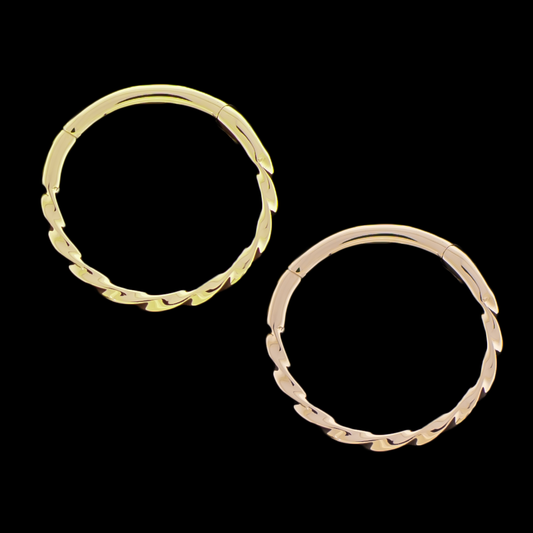
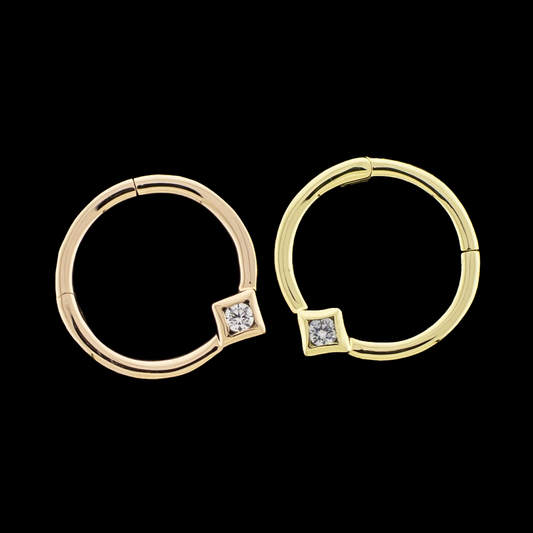
Every 14k gold hinged piercing ring in this collection is cast from solid gold - not plated, not gold-filled. Each piece is APP Phase 2 verified, produced in an ISO 9001-certified facility, and designed for everyday wear across healed piercings. From plain twisted designs to diamond-accented clickers, browse by style below or use the placement guide to find the right ring for your piercing.
What Makes a Hinged Ring Different
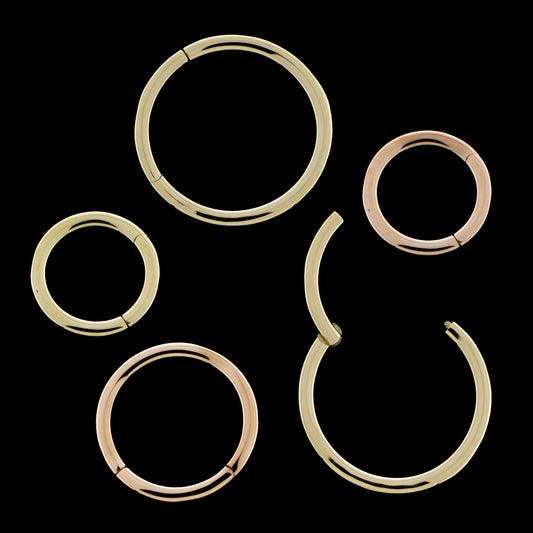
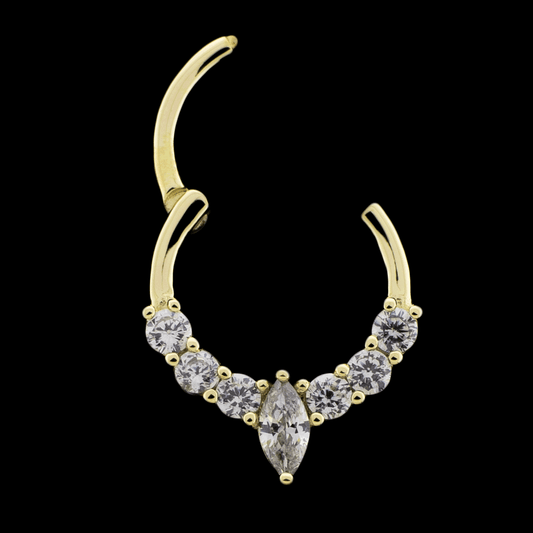
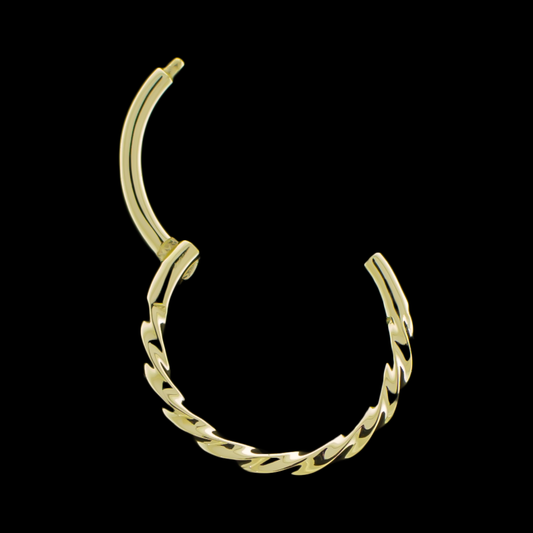
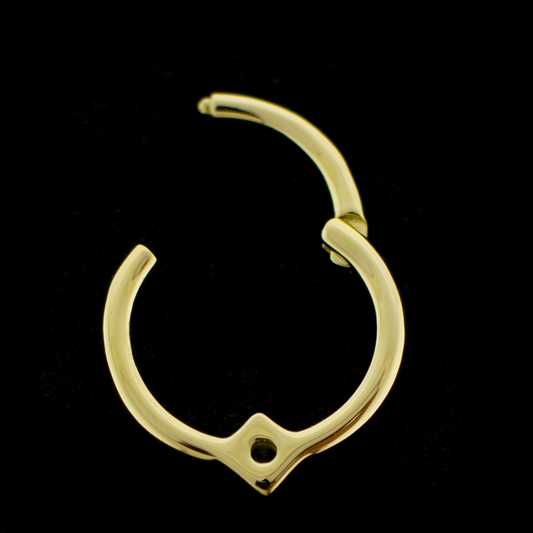
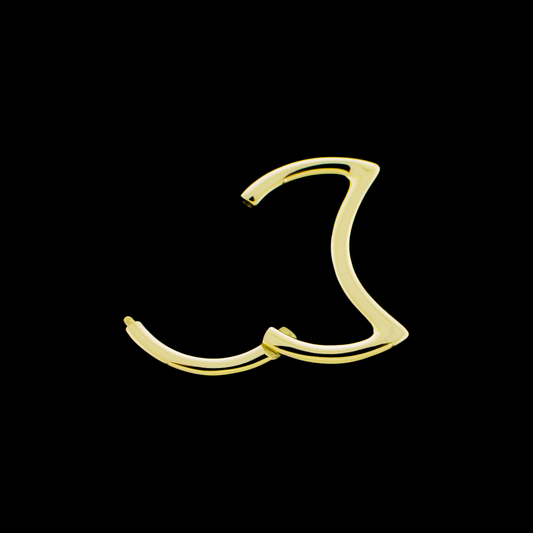
A hinged segment ring - also called a clicker ring - uses a spring-loaded hinge rather than a removable bead to open and close. The "segment" is a small section of the ring that swings outward on a hinge. You pull it open, insert the ring through your piercing, and press the segment back until it clicks into place. No tools. No fumbling with a tiny bead. No risk of scratching the fistula during changes.
That click matters more than it sounds. With a captive bead ring, you flex the ring slightly to seat or remove the bead, which puts lateral pressure on the piercing channel. A hinged ring eliminates that entirely - the ring stays rigid while the segment opens and closes. For healed piercings you plan to swap regularly, that difference in technique means less irritation over time.
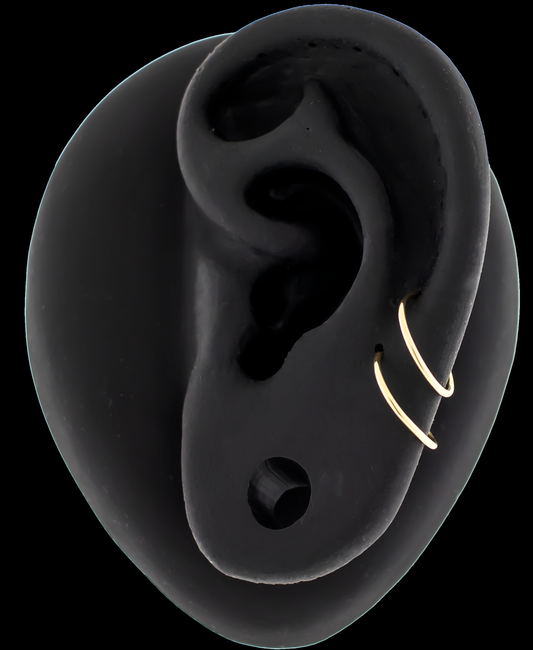
The other advantage is the look. When a hinged ring closes, the join is nearly invisible. The result is a clean, uninterrupted circle that reads as a seamless hoop at a conversational distance - which is why hinged rings have become the preferred format for daith, septum, and helix placements in curated ear stacks.
Shop 14K Gold Hinged Rings by Style
This collection covers four design families, from stripped-back twisted gold to gemstone-set statement pieces. Every ring is 14k solid gold with the hinge machined to APP-standard tolerances.
Plain and Twisted Gold Rings
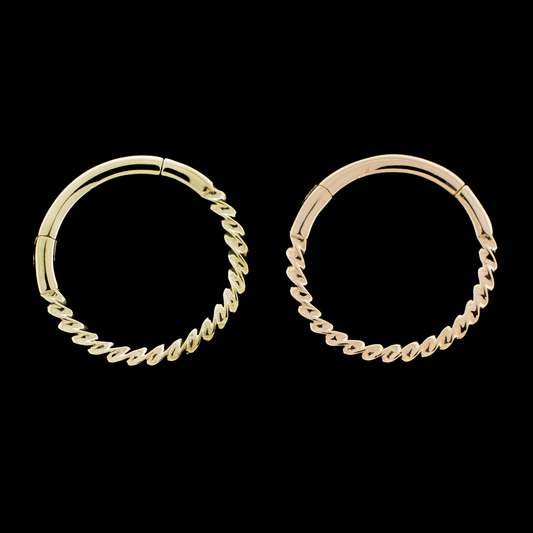
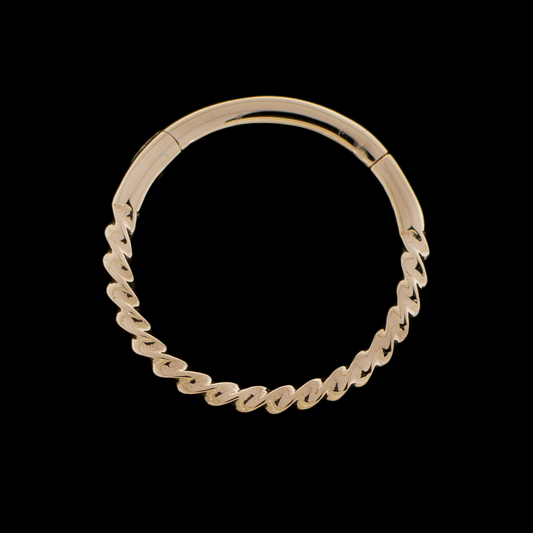
The Arietta and Thalina are twisted-rope hinged rings in solid 14k gold - Arietta in the smaller profile, Thalina slightly more substantial. The rope texture catches light at different angles, giving these rings more visual interest than a plain hoop without any decorative elements. Both work well in helix and septum placements where a clean gold look is the goal.
Classic Segment Rings
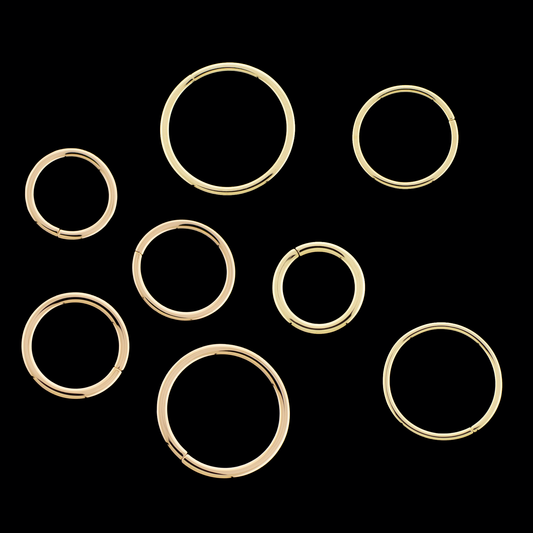
The Ariel is a sleek, unadorned 14k gold hinged segment ring with a high-polish finish. No texture, no stone, no detail beyond the gold itself. It is the most versatile piece in the collection - equally appropriate as a daith ring, a lobe hoop, or a discreet septum ring for professional settings where a plain gold circle reads as understated fine jewelry.
CZ and Gemstone Rings
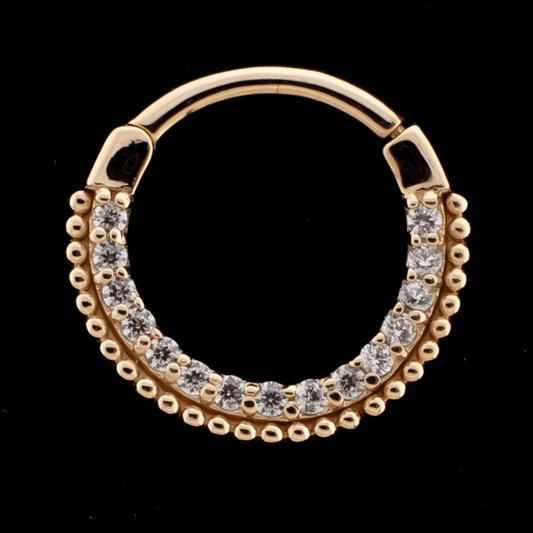
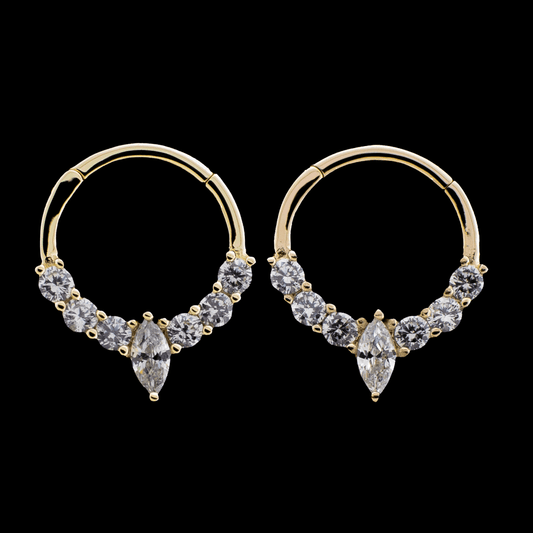
The Elowen features a marquis-cut CZ with surrounding accent gems in 14k gold. The Alora uses a beaded CZ border that runs along the front arc of the ring, keeping the stone low-profile and secure. Both read as statement pieces without the price point of natural diamonds. Helix and daith placements get the most from these designs, where the stone faces forward and catches direct light.
Diamond and Fine Accent Rings
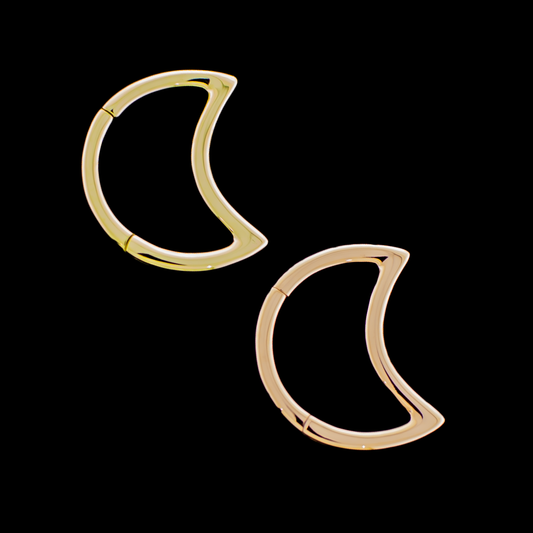
The Vera features a natural diamond accent in 14k gold - a single stone at the closure point that reads as a discreet flash of light rather than an obvious statement. The Valia is a crescent moon design in 14k gold, sculptural without being oversized. Both work in placements where you want fine jewelry quality without a loud design.
How to Choose the Right Size
Two measurements determine fit: gauge (the thickness of the ring wire that passes through the piercing) and inner diameter (the size of the circle inside the ring). Use your placement as the starting point - if you are unsure of your current gauge, check the stamped marking on any jewelry you already wear comfortably, or confirm with your original piercer before ordering.
- Septum - 16G or 14G, inner diameter 8mm to 10mm
- Daith - 16G, inner diameter 8mm to 12mm depending on anatomy
- Helix and Forward Helix - 16G or 18G, inner diameter 6mm to 8mm
- Conch - 14G or 16G, inner diameter 10mm to 14mm
- Lobe - 18G or 16G, inner diameter 8mm to 12mm
When two diameters feel equally right for a placement, choose the smaller one. A ring that fits without pressing against the anatomy is easier to wear long-term and less likely to cause irritation from contact with adjacent piercings.
Choosing Your Gold Tone
Khrysos 14k gold hinged rings are available in yellow, rose, and white gold. Yellow gold is the warmest and pairs naturally with most skin tones - it reads as classic fine jewelry in any placement. Rose gold carries a warm pink undertone that flatters olive and deeper skin tones particularly well and coordinates with opal or blush-toned gemstones in adjacent pieces. White gold delivers a cooler, near-silver finish that sits cleanly alongside titanium jewelry in the same stack without a visible tone contrast - the most practical option for anyone mixing metals across placements.
Why Buy Your Hinged Rings at Khrysos
Khrysos produces every 14k gold hinged piercing ring to APP Phase 2 standards at an ISO 9001-certified facility. Here is what that means in practice:
- Solid gold throughout. Every piece is 58.3% pure gold with durability alloys - no plating, no fill, no base metal core.
- APP Phase 2 verified. Material and dimension standards are met for both healed and healing-adjacent placements.
- Nickel-free and hypoallergenic. Safe for sensitive skin and long-term everyday wear.
- Same-day shipping. Orders placed before the daily cutoff ship the same day.
- Wholesale access. Studio accounts available for professional piercers sourcing APP-compliant gold inventory.
If you prefer a non-hinged format in solid 14k gold, the 14k gold seamless rings offer a different closure at the same material standard. For nose-specific placements, the 14k gold nose jewelry collection covers gauges and shapes designed for nostril and septum anatomy.
FAQ
What is a hinged segment ring and how is it different from a captive bead ring?
A hinged segment ring uses a spring-loaded hinge instead of a removable bead. To open it, pull the hinged segment outward; to close, press it back until it clicks. No tools needed. Unlike captive rings, the rigid body does not flex during changes, which puts less stress on the piercing channel.
Are Khrysos 14k gold hinged rings solid gold or gold-plated?
Solid 14k gold throughout - the same composition from the surface to the center of the wire. No plating, no gold fill, and no base metal core. Every piece in this collection is 58.3% pure gold alloyed for durability.
What gauge and diameter should I choose for my septum or daith?
Septum piercings most commonly use 16G or 14G with an 8mm-10mm inner diameter. Daith piercings typically use 16G with an 8mm-12mm diameter depending on anatomy. If you are unsure, check the gauge of your current jewelry or ask your original piercer before ordering.
Can I wear a gold hinged ring in a healing piercing?
Solid 14k gold is an APP-accepted material for healing piercings. However, hinged segment rings are generally recommended for healed placements only - the hinge mechanism can be harder to place correctly without irritating fresh tissue. For a healing piercing, have a professional piercer assess and install the jewelry.
How do I open and close a hinged ring safely?
Hold the ring steady with one hand. With your other hand, pull the hinged segment outward - it pivots on the hinge point. Once your piercing is in position, press the segment back toward the ring body until you feel and hear it click into place. A smooth click means it is fully seated.
Are these hinged rings available in rose gold and white gold?
Yes. Khrysos 14k gold hinged rings are available in yellow, rose, and white gold across multiple styles in this collection. Availability by tone varies by design - check the individual product pages for tone options.
Are Khrysos hinged rings compliant with APP piercing standards?
Yes. Every 14k gold hinged ring in this collection is APP Phase 2 verified and produced in an ISO 9001-certified facility. Khrysos jewelry is used and stocked by professional piercing studios as a compliant solid gold option.