

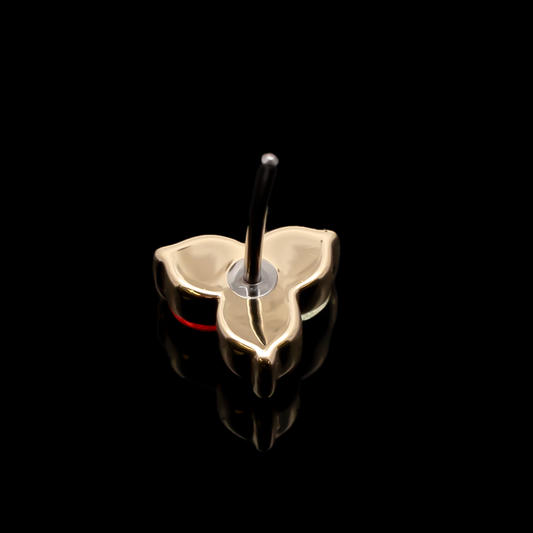

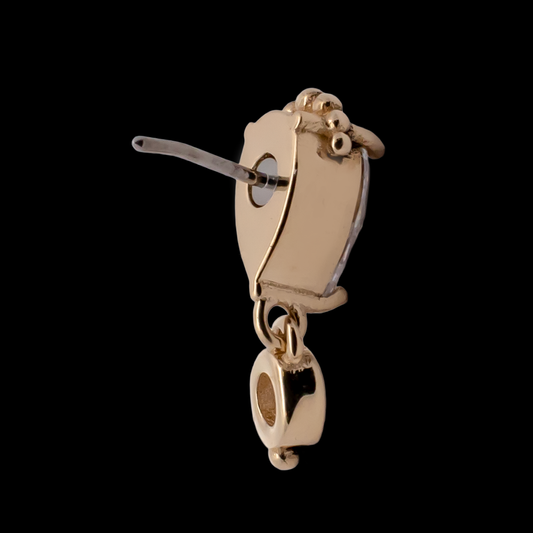

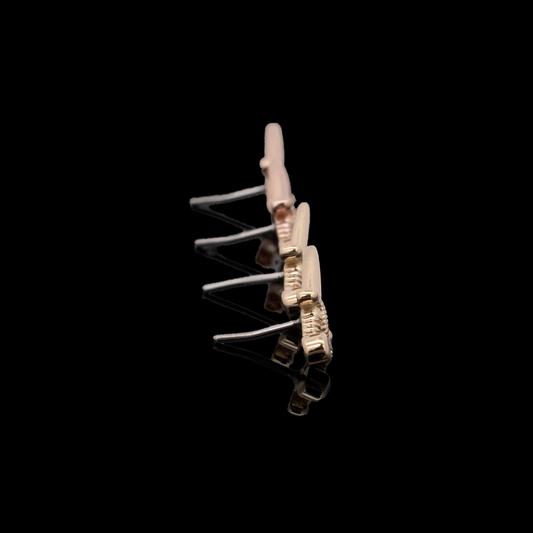

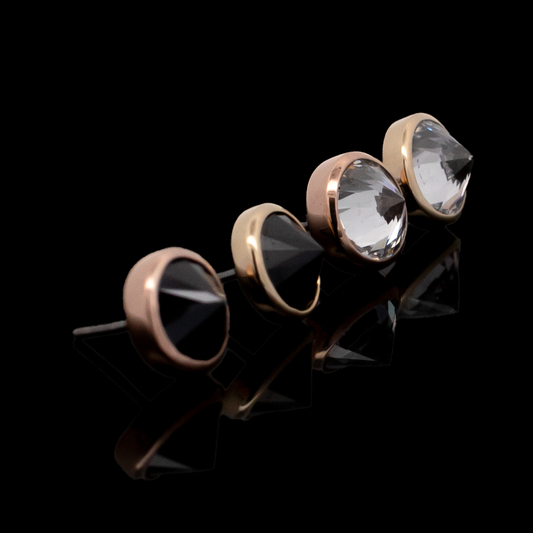

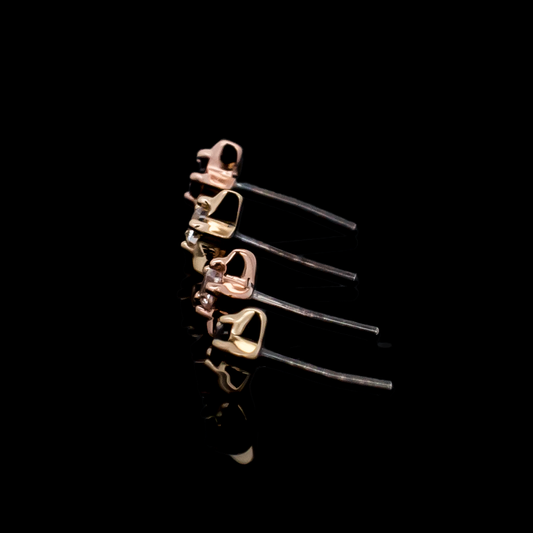

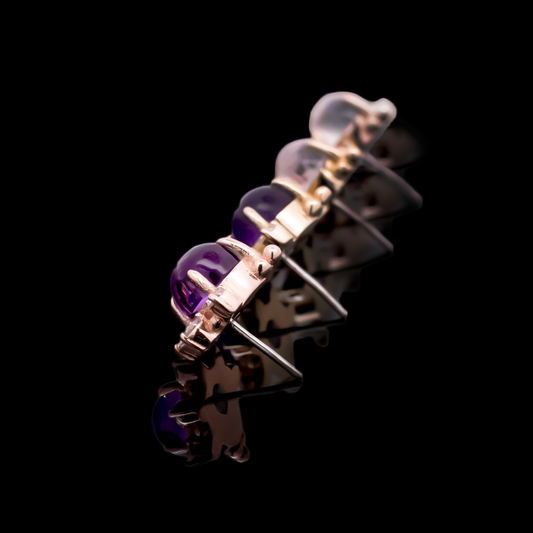

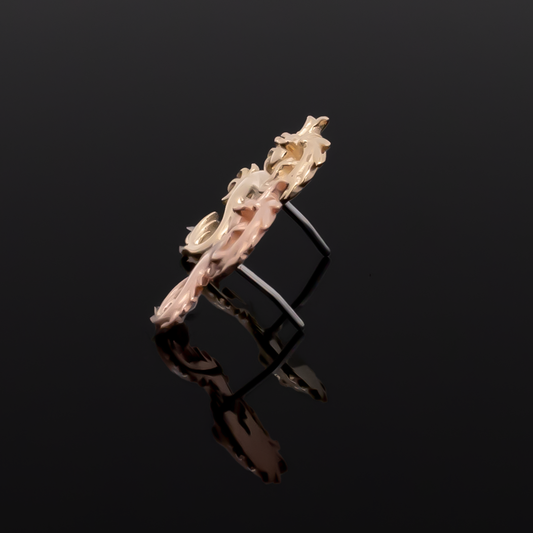
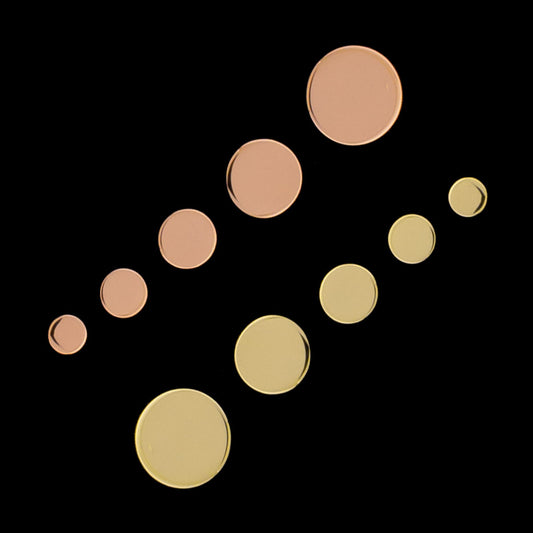
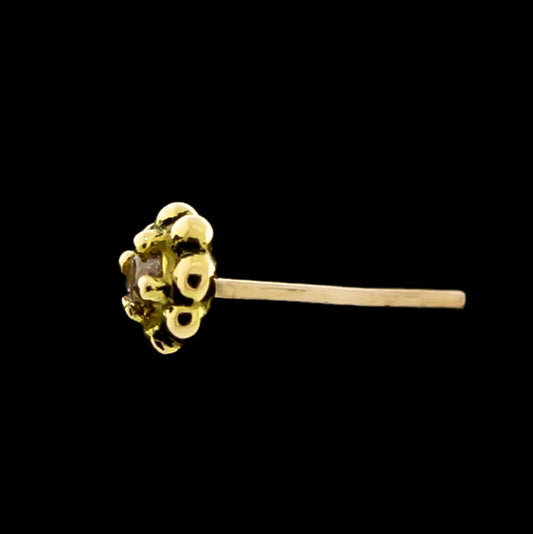
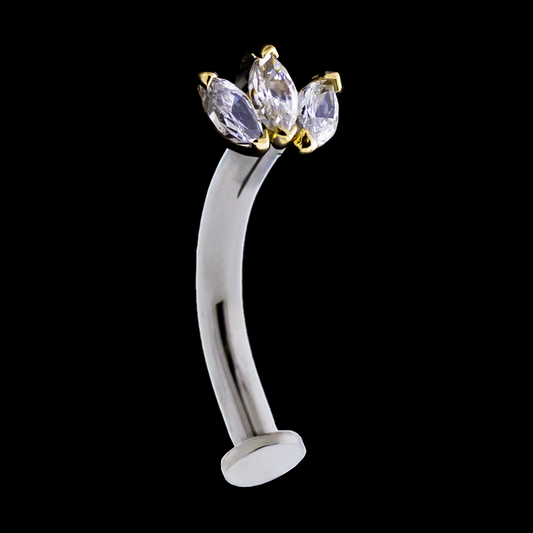
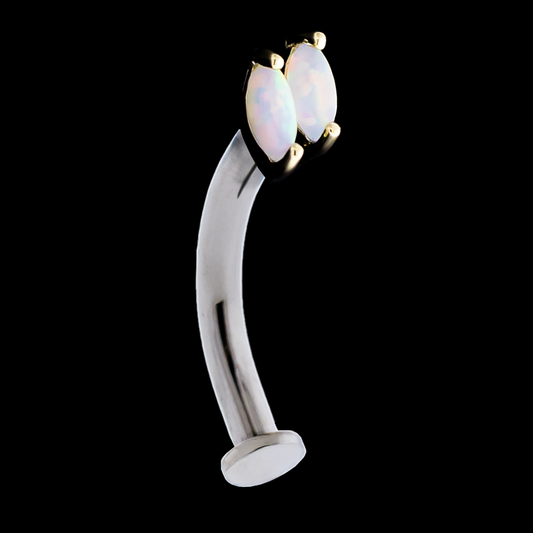
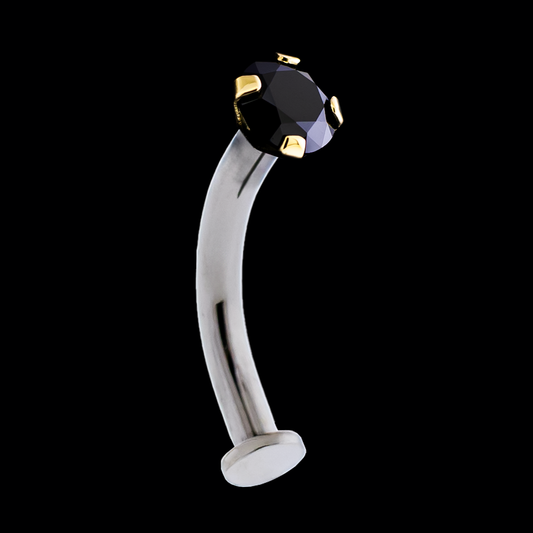
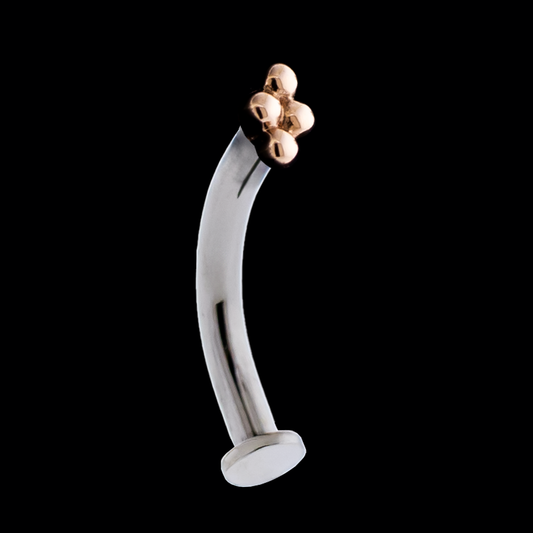
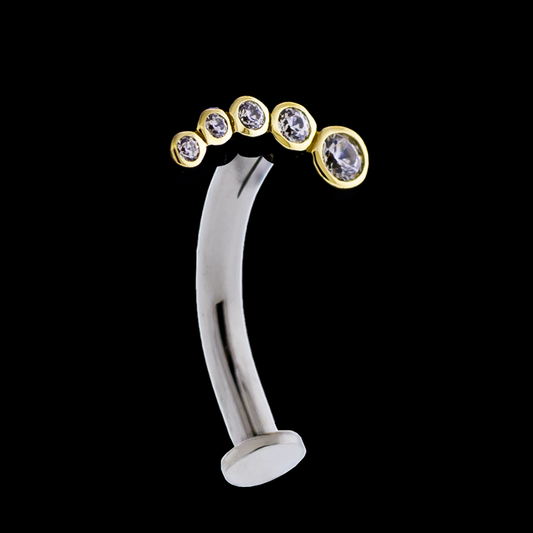
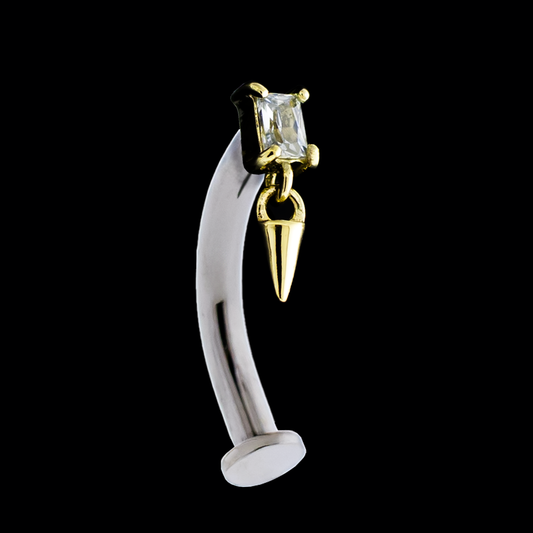
14k gold piercing jewelry is the material standard for anyone who wants to wear real gold every day without skin reactions or tarnish. Khrysos offers APP Phase 2 verified, solid 14kt gold piercing jewelry built to strict biocompatibility standards, covering threadless ends, hinged rings, nose jewelry, labrets, and floating navels. Browse by category below to find the right piece for your placement and style.
Shop 14K Gold Piercing Jewelry by Category
Whether you are building a cartilage stack, upgrading a healed nostril piercing, or sourcing inventory for a professional studio, this collection is organized so you can navigate directly to the jewelry format and placement style that fits your needs. Each sub-collection below covers a specific jewelry type in solid 14k gold, with sizing and gauge options suited to the placements it serves.
14KT Gold Threadless Ends
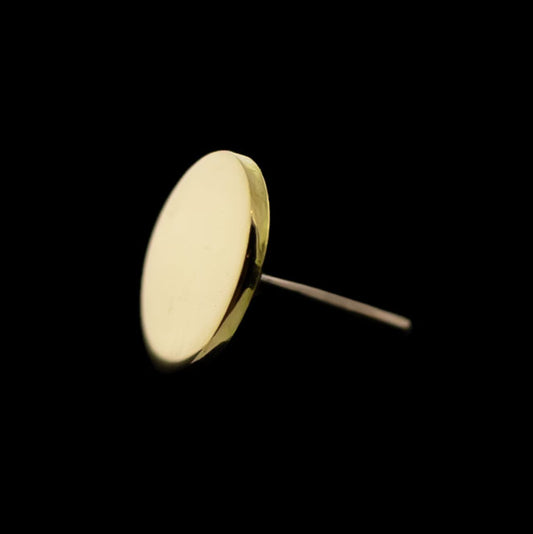
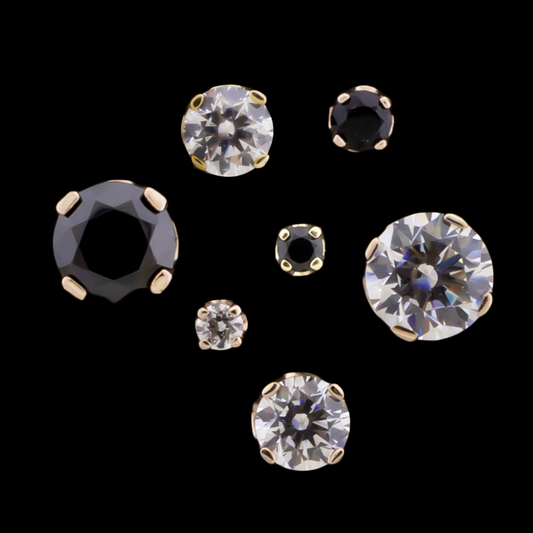
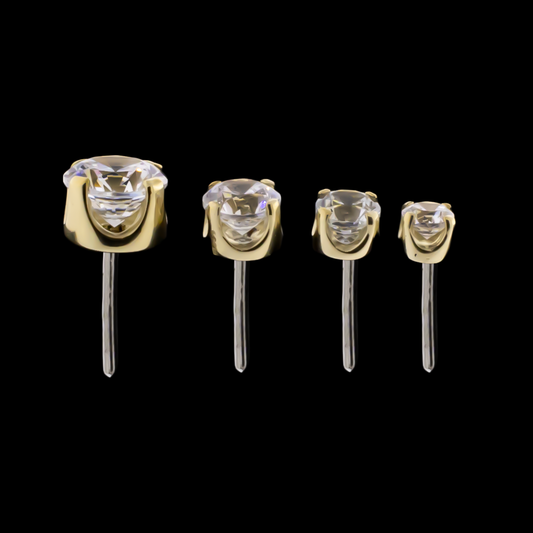
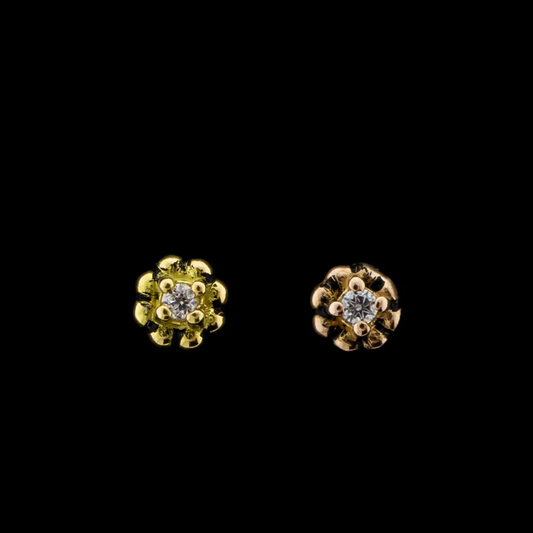
Threadless ends are the most versatile format in modern piercing jewelry. Each end presses onto a compatible threadless post through a tension-pin system that holds securely without screwing, which minimizes the risk of the end coming loose during regular wear. The range covers solid gold discs, prong-set gemstone ends, sculptural designs, and bezel-set stones in 14k solid gold, compatible with both 14k gold and titanium threadless posts.
14KT Gold Rings
Solid gold rings in 14k work across a wide range of placements, including daith, septum, helix, conch, nostril, and lobe. Rings are available in multiple gauges and inner diameters to match anatomy accurately. The hinged segment design on clicker-style rings makes insertion clean and single-handed, reducing handling time during changes, which matters for fresh piercings and for professionals working in a studio setting.
14KT Nose Jewelry
Nose piercing jewelry in 14k gold covers seamless rings, nose screws, and flat-back labret-style studs for both nostril and septum placements. All pieces are solid gold throughout, with no plating or composite construction. Options include 18G and 20G for nostril piercings, as well as 16G for septum placements, covering the full range of gauges piercers use most frequently for nose work.
14KT Gold Labrets
Flat-back labret posts in 14k gold are the base jewelry for dozens of placements, from lip and labret to helix, tragus, conch, and forward helix. The flat disc back sits flush against the skin and reduces pressure bump formation compared to threaded ball-back designs. Every labret in this collection is precision-milled to APP dimension standards and internally threaded, so the smooth end is always the part passing through the fistula.
14KT Gold Floating Navels
Floating navel jewelry sits at the piercing entrance rather than hanging through the navel, creating a cleaner fit that works especially well for inverse navels and shallower tissue anatomy. The threadless format allows the decorative end to be swapped without removing the post, making it practical for healed navel piercings over the long term. Every piece is solid 14k gold with no gold-filled or gold-plated components.
Why Real Gold Matters for Piercing Jewelry
The difference between real gold piercing jewelry and gold-plated alternatives matters more in piercing than in any other jewelry category, because the material is in direct and continuous contact with living tissue. Choosing the wrong material for a healing piercing is not just an inconvenience it can extend healing time, trigger allergic reactions, and in some cases result in rejection of the piercing entirely.
Biocompatibility and Skin Safety
Solid 14k gold is an alloy of approximately 58.3% pure gold combined with biocompatible stabilizing metals such as silver, copper, and zinc. This composition gives the metal enough hardness to hold precise geometry under daily wear while keeping the gold content high enough to stay non-reactive with human tissue. Unlike surgical stainless steel, which uses nickel as a key alloying component, solid 14k gold is nickel-free. Nickel is the most common contact allergen associated with piercing complications, and switching to real 14k gold piercing jewelry eliminates that risk entirely.
The Problem with Gold-Plated Alternatives
For healing piercings, material integrity matters in a specific and measurable way. Tissue forming inside a fresh piercing channel is highly sensitive to any metal leaching. Gold-plated jewelry degrades with exposure to sweat, body oils, water, and friction. As the plating wears through, the base metal underneath, often brass or copper, comes into direct contact with the fistula. Solid 14kt gold piercing jewelry does not have this failure mode. The alloy is consistent throughout the piece, from surface to center, and it does not change composition with wear or time.
Built for Daily, Long-Term Wear
Real 14k gold piercing jewelry holds its color and surface quality through showers, swimming, and sleep without requiring removal. This matters most for cartilage and nose piercings that are worn continuously for months or years. There is no plating to check, no tarnish to manage, and no need to remove the piece before water exposure. The jewelry performs the same way on year five as it does on day one.
How to Choose Your 14K Gold Piercing Jewelry
Choosing the right piece of 14k gold piercing jewelry comes down to four decisions: gauge, post length, threading system, and gold tone. Getting each one right before you buy prevents sizing problems, unnecessary irritation, and premature jewelry changes that can set back a healing piercing.
Gauge and Post Length
Gauge is the diameter of the post or ring and must match your original piercing. Most cartilage placements (helix, tragus, conch, daith, rook) are pierced at 16G or 18G. Nostril piercings typically use 18G or 20G, with 20G being common for delicate anatomy. Septum piercings are usually done at 16G. If you do not know your gauge, your piercer should have it on file. Post length and ring diameter depend on your specific anatomy, not a standard measurement. For flat-back labrets, the post must be long enough to accommodate swelling in a fresh piercing without embedding, and short enough not to catch or shift once healed. Your piercer is the best source for these measurements.
Threading System: Threadless vs. Internally Threaded
This is one of the most important decisions when buying gold piercing jewelry, and one that most retailers fail to explain clearly. Threadless jewelry uses a bent post-pin that creates holding tension inside a hollow end, so there are no exposed threads anywhere near the fistula during insertion or wear. Internally threaded jewelry keeps the threads inside the post shaft, with a smooth-sided end passing through the piercing channel. Both systems are endorsed by the Association of Professional Piercers and are significantly safer than externally threaded jewelry, where sharp thread ridges contact the fistula directly. All Khrysos 14k gold piercing jewelry is built to threadless or internally threaded standards, in line with APP requirements.
Gold Tone
Gold tone is a personal and aesthetic decision once the above criteria are met. Yellow gold is warm and works with most skin tones. White gold has a cooler, silver-like finish and is alloyed with metals such as palladium for biocompatibility, with no nickel content in quality body jewelry. Rose gold gets its warm pink tone from a higher copper content in the alloy and is popular for helix stacks and ear curation. All three tones are equally biocompatible when the piece is solid 14k gold throughout.
14K Gold vs. Gold-Plated vs. Gold-Filled Piercing Jewelry
Not all piercing jewelry gold is manufactured to the same standard, and the differences are significant when the piece lives inside a healing or healed tissue channel. These three categories look nearly identical in product photography but represent very different materials in practice, particularly over time and in contact with tissue.
Solid 14K Gold
- Made from 58.3% pure gold alloyed with biocompatible metals throughout the entire piece, surface to center
- Safe for fresh and healed piercings; nickel-free, non-reactive, and compliant with APP material standards
- Does not tarnish, does not flake, and does not change composition with daily wear or prolonged water exposure
- Maintains the same material quality from first wear through years of continuous use
- Higher upfront cost reflects actual gold content with no base metal filler
Gold-Plated
- A base metal core (typically brass, copper, or steel) with a thin gold layer applied by electroplating
- Not safe for healing piercings; the plating wears through friction and body chemistry, exposing reactive base metals to tissue over time
- Tarnishes and discolors as the plating degrades, usually within months of regular wear
- Lowest price point but highest long-term cost when replacement and potential piercing complications are factored in
Gold-Filled
- A base metal core with a thicker gold layer bonded under heat and pressure; US law requires at least 5% gold by weight
- Not recommended for fresh piercings; the base metal core means the long-term contact surface is not solid gold
- More durable surface than plated, but the underlying base metal can still be exposed over several years of wear
- Mid-range price, positioned between plated and solid gold in both durability and cost
For any gold jewelry piercing application, the practical conclusion is straightforward. Solid 14k gold is the only format in this comparison that maintains the same material against your tissue for the entire lifespan of the piece. Gold-plated and gold-filled options change composition over time in ways that directly affect piercing health, even when they appear identical to solid gold on arrival.
Why Buy Your Gold Piercing Jewelry at Khrysos
Khrysos is one of a small number of body jewelry suppliers to hold APP Phase 1 and 2 verification. Every piece of piercing gold jewelry in this collection is produced and shipped to the same standards that APP-member studios rely on.
- APP Phase 2 Verified: Khrysos holds full APP supplier verification, meaning every piece meets the material, dimension, and finishing standards required for use in APP-affiliated studios
- ISO9001-Certified Manufacturing: All jewelry is produced at an ISO9001-certified facility, ensuring consistent quality control across gauge accuracy, surface finish, and alloy composition
- Precision-Milled to APP Dimensions: Each piece is milled to tight tolerances, so post lengths, gauges, and thread pitches match what piercers and clients expect from professional-grade jewelry
- Same-Day Shipping: Orders placed within the shipping cutoff window leave the same day, keeping studio inventory topped up without long lead times
- Wholesale Access for Professional Piercers: Studios and piercers can apply for a wholesale account through the website to source the full 14k and 18k solid gold range at professional pricing
FAQ
Is Khrysos 14k gold piercing jewelry solid gold or gold-plated?
Every piece in this collection is solid 14k gold throughout. No plating, gold-fill, or base metal cores are used. The material is consistent from the surface to the center of each piece.
Is 14k gold safe for a new or healing piercing?
Yes, when fitted correctly by a professional piercer. Solid 14k gold is nickel-free and meets APP material standards for initial jewelry. Post length and gauge must be sized accurately for your anatomy before placement.
What gauge options are available for 14k gold piercing jewelry?
Options across this collection include 16G, 18G, and 20G depending on jewelry type. Gauge and dimension availability varies by style. The size selector on each product page shows the current options for that piece.
What is the difference between threadless and internally threaded gold jewelry?
Threadless jewelry holds via tension between the post-pin and the hollow end, with no thread contact near the fistula. Internally threaded jewelry has threads inside the post shaft, so only a smooth surface passes through the piercing channel. Both are APP-recommended formats used across the Khrysos 14k gold range.
Will 14k gold tarnish or change color over time?
Solid 14k gold does not tarnish. The alloy maintains its color and surface quality through regular wear, water exposure, and daily activity without any degradation in the gold content or finish.
How should I care for my 14k gold piercing jewelry?
Rinse with clean water and dry thoroughly after exposure to chlorine, saltwater, or heavy sweat. Avoid abrasive cleaners and chemical products. Store pieces separately to prevent scratching from contact with harder materials.
Does Khrysos supply APP-compliant jewelry for professional piercers?
Yes. Khrysos holds APP Phase 2 verification and offers wholesale accounts for studios requiring APP-standard 14k and 18k solid gold inventory. Wholesale inquiries can be submitted through the website.